

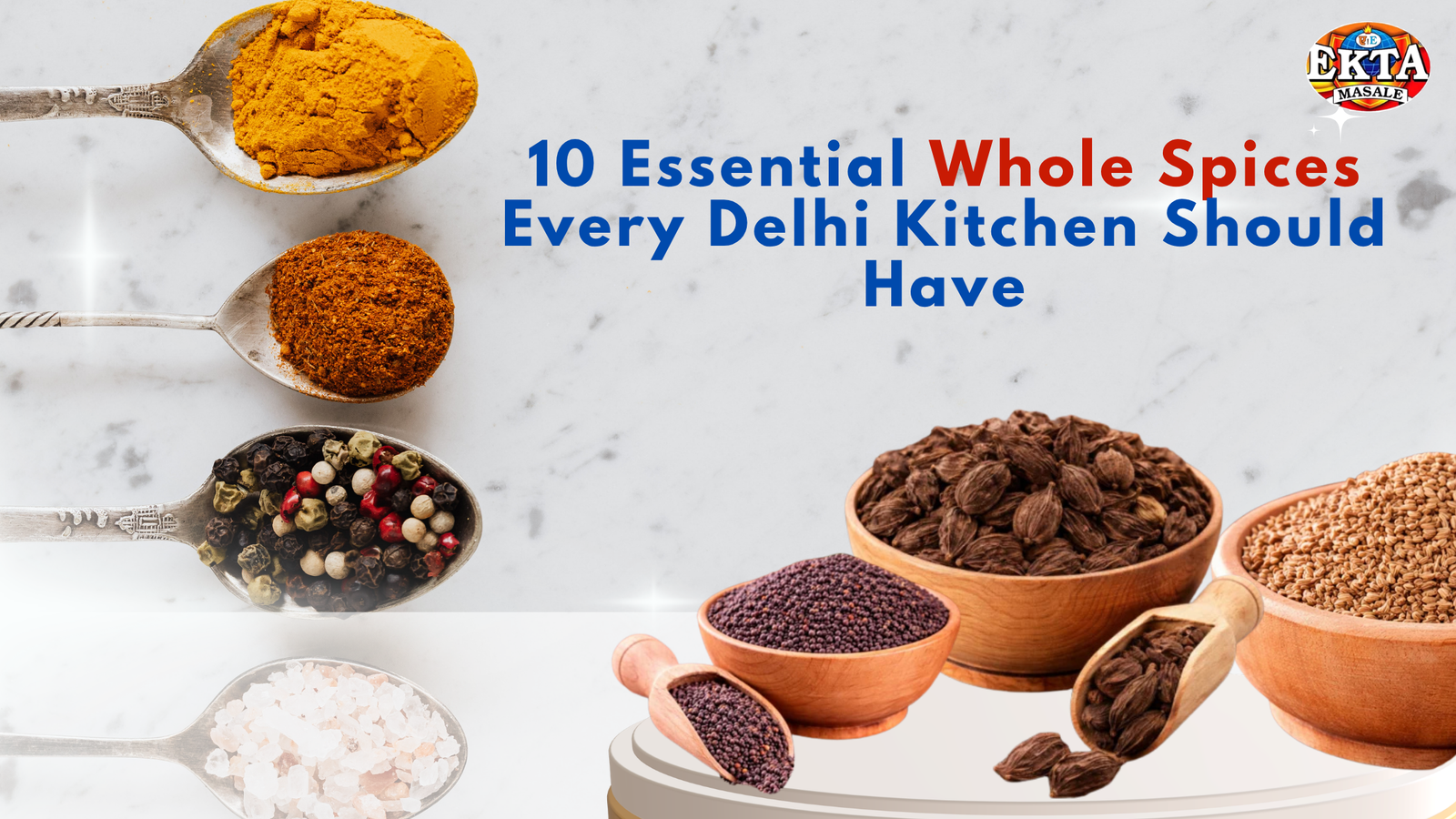
Delhi is known for its rich food culture, from comforting dal and homemade sabzi to aromatic biryani, rich curries, kebabs and traditional sweets. Behind many of these flavours is one simple ingredient — whole spices.
Unlike ready-made spice blends, whole spices can be added directly to oil or ghee, roasted before grinding, or used to slowly infuse flavour into a dish. They can add aroma, warmth, depth and character to everyday recipes.
For Delhi households, keeping a small collection of essential whole spices in the kitchen can make everyday cooking much more flavorful.
Whether you are preparing dal tadka, rajma, chole, biryani, pulao, paneer, chicken curry or homemade chai, the right whole spices can make a noticeable difference.
In this guide, we explore 10 essential whole spices every Delhi kitchen should have and explain how you can use them in everyday Indian cooking.
1. Cumin Seeds (Jeera)
Cumin seeds, commonly known as Jeera, are one of the most useful whole spices in an Indian kitchen.
Jeera has a warm, earthy and slightly nutty aroma. One of the easiest ways to use it is by adding whole cumin seeds to hot oil or ghee at the beginning of cooking.
This simple technique creates a classic jeera tadka that works beautifully with dal, vegetables, rice and many North Indian dishes.
How to use Jeera
You can use whole cumin seeds for:
-
Dal tadka
-
Jeera rice
-
Aloo jeera
-
Vegetable curries
-
Rajma
-
Chole
-
Homemade spice blends
For a stronger flavour, lightly roast cumin seeds and grind them before adding them to a recipe.
Tip: Store cumin in an airtight container away from moisture and direct sunlight to help preserve its aroma.
2. Black Pepper (Kali Mirch)
Black pepper is another essential whole spice for Indian cooking.
Whole black peppercorns have a stronger and more complex aroma than many ready-ground versions because you can grind them fresh whenever required.
Black pepper works particularly well in:
-
Soups
-
Curries
-
Dal
-
Marinades
-
Chai
-
Rice dishes
-
Chicken preparations
-
Spice blends
Freshly crushed black pepper can also be sprinkled over salads, eggs and snacks.
Ekta Masale also offers black pepper products, including its Black Pepper Powder, while whole spices form a dedicated category on the website. (Ekta Masale)
3. Green Cardamom (Choti Elaichi)
Green cardamom is known for its sweet, fresh and highly aromatic flavour.
It is particularly popular in North Indian cooking and is a favourite for both sweet and savoury recipes.
You can add whole green cardamom pods to:
-
Masala chai
-
Biryani
-
Pulao
-
Kheer
-
Rice dishes
-
Indian sweets
-
Rich gravies
For chai, simply crush the pod slightly before adding it to boiling water or milk. This helps release its aroma.
Ekta Masale currently lists Premium Green Cardamom under its Whole Spices category. (Ekta Masale)
4. Black Cardamom (Badi Elaichi)
If green cardamom provides a sweet and refreshing aroma, black cardamom offers a much deeper and smoky character.
It is especially useful for rich North Indian dishes where you want a bold aroma.
Black cardamom works well in:
-
Biryani
-
Pulao
-
Rajma
-
Chole
-
Meat curries
-
Rich gravies
-
Slow-cooked dishes
Because of its strong flavour, you generally don’t need a large quantity.
Ekta Masale offers Premium Black Cardamom (Badi Elaichi) as a whole spice, described for use in curries, biryani and rich dishes. (Ekta Masale)
5. Cinnamon (Dalchini)
Cinnamon, or Dalchini, brings a warm and slightly sweet aroma to Indian cooking.
It is commonly used as part of the base seasoning for rice dishes, gravies and spice blends.
Try adding a small piece of cinnamon while preparing:
-
Biryani
-
Pulao
-
Vegetable curry
-
Chicken curry
-
Mutton curry
-
Garam masala
-
Masala chai
Cinnamon is especially useful when you want to build a layered aroma rather than simply add heat.
6. Cloves (Laung)
Cloves are small but extremely aromatic whole spices.
They have a warm, intense flavour and are frequently paired with cinnamon, cardamom and other whole spices.
Cloves can be used in:
-
Biryani
-
Pulao
-
Rice dishes
-
Curries
-
Masala chai
-
Garam masala
-
Festive recipes
A few cloves added while cooking rice can give the entire dish a wonderful aroma.
Tip: Because cloves have a strong flavour, use them in moderation.
7. Bay Leaf (Tej Patta)
Tej Patta is a familiar ingredient in many North Indian kitchens.
It is commonly added to hot oil or ghee at the beginning of cooking to create an aromatic base.
Bay leaf can be used in:
-
Rajma
-
Chole
-
Dal
-
Biryani
-
Pulao
-
Vegetable curries
-
Meat curries
-
Gravies
For Delhi-style home cooking, Tej Patta is particularly useful when preparing dishes with onion-tomato gravies or rice.
Remember to remove the whole bay leaf before serving.
8. Coriander Seeds (Dhaniya Sabut)
Coriander seeds have a fresh, citrusy and slightly earthy aroma.
They can be used whole, roasted and ground, or combined with other spices to create homemade masala blends.
Whole coriander seeds are excellent for:
-
Pickles
-
Curries
-
Chole
-
Vegetable dishes
-
Spice blends
-
Homemade masala
-
Marinades
One of the best ways to use coriander seeds is to lightly dry-roast them before grinding. This releases their aroma and gives homemade masala a deeper flavour.
9. Fennel Seeds (Saunf)
Fennel seeds are known for their naturally sweet and refreshing flavour.
They are useful in both cooking and traditional Indian after-meal practices.
Fennel can be used in:
-
Vegetable dishes
-
Pickles
-
Curries
-
Spice blends
-
Some meat preparations
-
Tea
-
Homemade masala
Roasted fennel can also be used to add a subtle sweet note to certain recipes.
If you enjoy experimenting with traditional Indian flavours, keeping Saunf in your spice box is a good idea.
10. Mustard Seeds (Rai)
Mustard seeds are especially useful for tadka and tempering.
When mustard seeds are added to hot oil, they begin to crackle and release their characteristic aroma.
They can be used in:
-
Vegetable preparations
-
Pickles
-
Dal
-
Chutneys
-
Tempering
-
Regional Indian recipes
For everyday cooking, a small quantity of mustard seeds can completely change the aroma of a simple vegetable dish.
Why Should You Keep Whole Spices in Your Kitchen?
Whole spices offer versatility because you can use them in different ways depending on the recipe.
You can:
1. Add them directly
Add whole spices to hot oil or ghee at the beginning of cooking.
2. Roast them
Dry roasting can bring out their natural aroma and make them suitable for homemade spice powders.
3. Grind them fresh
Grinding whole spices when required can be useful when preparing homemade masala blends.
4. Combine them
Cinnamon, cloves, cardamom, cumin and other spices can be combined to create aromatic blends for rice dishes, curries and other recipes.
Whole Spices for Popular Delhi Dishes
Delhi’s food culture makes whole spices particularly useful.
| Dish | Whole Spices You Can Use |
|---|---|
| Dal Tadka | Jeera, Mustard |
| Jeera Rice | Cumin |
| Rajma | Cumin, Bay Leaf, Black Cardamom |
| Chole | Cumin, Bay Leaf, Black Cardamom |
| Biryani | Cinnamon, Cloves, Cardamom, Bay Leaf |
| Pulao | Cumin, Cinnamon, Cloves |
| Chicken Curry | Black Cardamom, Cinnamon, Cloves |
| Masala Chai | Green Cardamom, Cinnamon, Cloves |
| Pickles | Mustard, Fennel, Coriander |
| Vegetable Curry | Cumin, Bay Leaf, Coriander |
How to Store Whole Spices Properly
Buying good spices is only the first step. Proper storage is equally important.
Follow these simple tips:
Keep spices in airtight containers
Moisture can affect the quality and aroma of spices. Airtight containers are a better option for everyday storage.
Keep them away from sunlight
Store your spice containers in a cool and dry kitchen cabinet.
Don’t keep spices near the stove
Constant heat and steam can affect their freshness.
Buy according to your usage
If you don’t use a particular spice frequently, avoid buying an unnecessarily large quantity.
Label your containers
If you keep several whole spices together, labels can make them easier to identify.
How to Choose Quality Whole Spices in Delhi
Whether you’re shopping at a local market or buying whole spices online in Delhi, look for a few basic things.
Check:
-
Aroma
-
Appearance
-
Clean packaging
-
Product information
-
Packaging date
-
Storage instructions
-
Suitable quantity for your usage
The goal should be to choose spices that fit your cooking requirements and are properly packed and stored.
Ekta Masale is based in Fatehpuri, Delhi, in the wider area associated with Delhi’s historic spice trade, and its website offers dedicated Whole Spices along with other spice categories. (Ekta Masale)
Why Whole Spices Are a Must-Have for Delhi Kitchens
From a simple bowl of dal to a festive biryani, whole spices can add a distinctive layer of aroma and flavour.
You don’t need a huge collection to get started.
A basic spice box containing:
Jeera + Black Pepper + Green Cardamom + Black Cardamom + Cinnamon + Cloves + Bay Leaf + Coriander Seeds + Fennel + Mustard Seeds
can cover a wide range of everyday Indian recipes.
As you become more comfortable with whole spices, you can gradually add more varieties according to your cooking style.
Shop Whole Spices Online with Ekta Masale
Looking for whole spices in Delhi?
Explore Ekta Masale’s range of whole spices for everyday Indian cooking. From aromatic cardamom to other essential spices, choosing the right ingredients can help you bring more flavour and aroma to your homemade meals.
Explore Ekta Masale Whole Spices and discover spices for your everyday kitchen. (Ekta Masale)
Frequently Asked Questions
Which whole spices are essential for an Indian kitchen?
Some commonly used options include cumin, black pepper, cardamom, cinnamon, cloves, bay leaf, coriander seeds, fennel and mustard seeds.
What are the best whole spices for Delhi-style cooking?
Cumin, black cardamom, cinnamon, cloves, bay leaf and coriander seeds are particularly useful for many North Indian and Delhi-style recipes.
Can I buy whole spices online in Delhi?
Yes. Whole spices can be purchased online, making it convenient to order spices for everyday cooking.
Are whole spices better than powdered spices?
Both have their uses. Whole spices are particularly useful for tempering, roasting and grinding fresh, while powdered spices are convenient for everyday recipes.
How should I store whole spices?
Keep them in airtight containers in a cool, dry place away from direct sunlight, moisture and excess heat.