
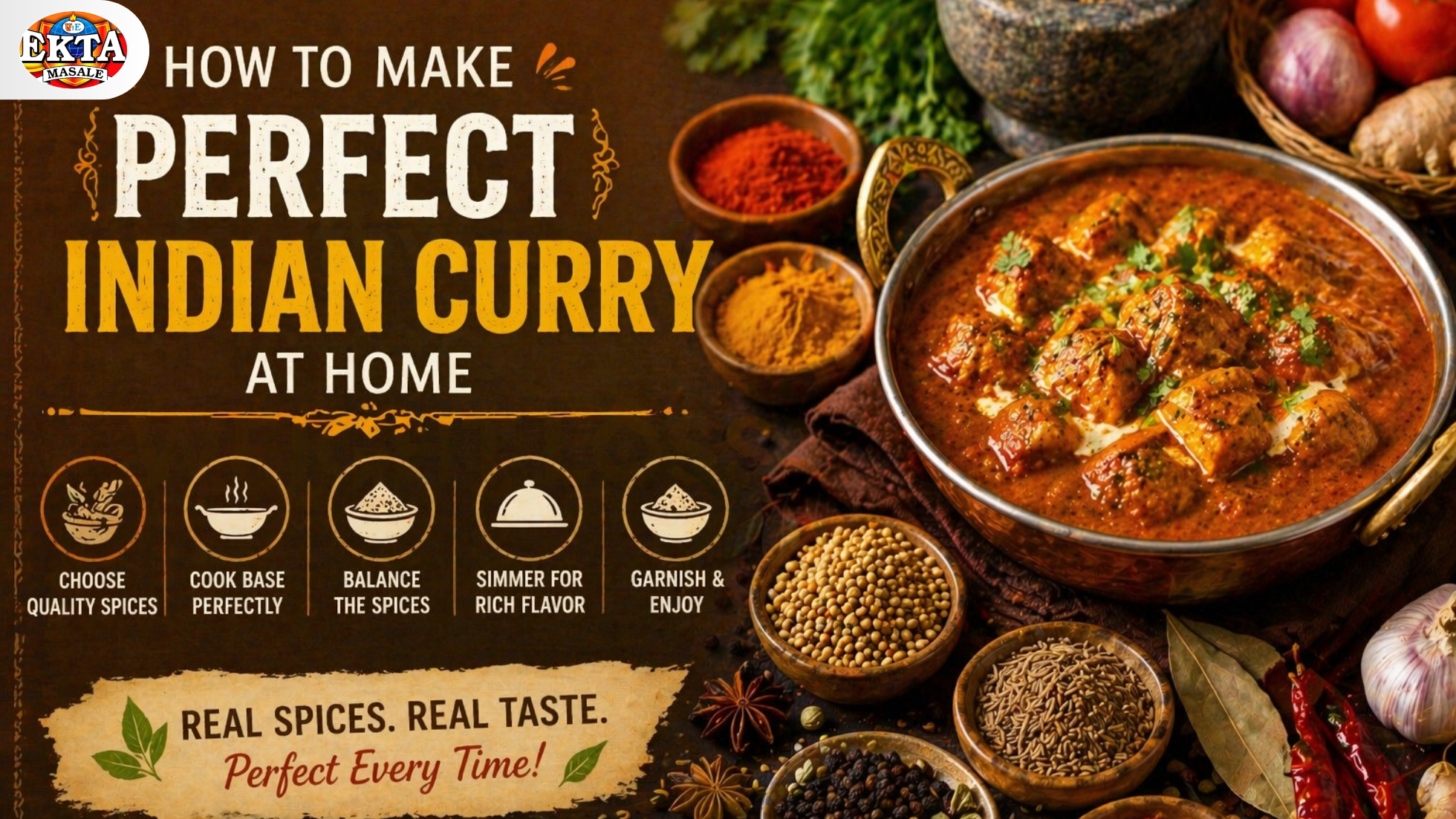
Indian curry is not just a dish — it’s an experience of flavors, aromas, and traditions. Whether you love creamy butter chicken, spicy paneer curry, or simple dal, the secret behind every perfect Indian curry lies in the right spices, technique, and timing.
In this detailed guide, you will learn how to make restaurant-style Indian curry at home, along with expert tips, spice combinations, and cooking secrets that will take your cooking to the next level.
What is Indian Curry?
Indian curry is a combination of spices (masala), vegetables or meat, and a flavorful gravy base. Unlike Western curries, Indian curries vary widely depending on region, ingredients, and cooking style.
Types of Indian Curry:
Dry curry (Sabzi)
Gravy curry (Paneer, Chicken, Mutton)
Coconut-based curry (South Indian)
Creamy curry (North Indian)
Lentil curry (Dal)
Why Homemade Curry is Better?
Making curry at home gives you:
✅ Full control over ingredients
✅ Healthier (no preservatives)
✅ Custom spice level
✅ Authentic taste
Using high-quality spices like Ekta Masale ensures rich aroma and pure flavor, making your curry taste truly authentic.
Essential Ingredients for Perfect Indian Curry
To make a perfect curry, you must understand the role of each ingredient.
1. Base Ingredients
Onion (finely chopped or paste)
Tomato (puree or chopped)
Ginger-Garlic paste
Oil or Ghee
2. Whole Spices (Tempering)
Cumin seeds (Jeera)
Bay leaf (Tej Patta)
Cloves (Laung)
Cinnamon (Dalchini)
Cardamom (Elaichi)
3. Ground Spices (Masala)
Turmeric powder (Haldi)
Red chili powder
Coriander powder (Dhaniya)
Garam masala
Cumin powder
Pro Tip: Always use fresh and pure spices for best results.
Step-by-Step Process to Make Perfect Indian Curry
Step 1: Heat Oil and Add Whole Spices


Heat oil or ghee in a pan
Add cumin seeds, bay leaf, cloves, cinnamon
Let them crackle and release aroma
👉 This step is called “Tadka” — the foundation of flavor.
Step 2: Prepare the Onion Base


Add finely chopped onions
Cook until golden brown
👉 Secret: Properly browned onions create depth and richness.
Step 3: Add Ginger-Garlic Paste


Add ginger-garlic paste
Cook until raw smell disappears
Step 4: Add Tomato and Cook the Masala


Add tomato puree or chopped tomatoes
Cook until oil separates from masala
This process is called “Bhuna” — very important for authentic taste.
Step 5: Add Spices (Masala Magic)


Add:
Turmeric powder
Red chili powder
Coriander powder
Salt
👉 Mix well and cook for 2–3 minutes.
Step 6: Add Main Ingredient (Veg/Non-Veg)


Add paneer, chicken, vegetables, or dal
Mix well with masala
Step 7: Add Water and Simmer


Add water as per consistency
Cover and cook on low flame
Slow cooking enhances flavor.
Step 8: Finish with Garam Masala & Garnish


Add garam masala at the end
Garnish with fresh coriander
Secret Tips to Make Restaurant-Style Curry
1. Always Cook Masala Properly
Half-cooked masala = bad taste
2. Balance of Flavors
Spicy + tangy + rich = perfect curry
3. Use Butter or Cream (Optional)
For creamy curries like:
Butter chicken
Paneer butter masala
4. Use Fresh Spices
Old spices = dull flavor
Choose Ekta Masale for consistent taste and quality.
Common Mistakes to Avoid
Not cooking onions properly
Adding spices directly without roasting
Too much water
Overcooking vegetables
Using low-quality masala
Different Types of Indian Curry You Can Try
Popular Veg Curries
Paneer Butter Masala
Chana Masala
Mix Veg Curry
Popular Non-Veg Curries
Chicken Curry
Mutton Curry
Egg Curry
South Indian Curries
Coconut curry
Sambar
How to Customize Your Curry
You can easily adjust curry according to taste:
| Preference | What to Do |
|---|---|
| Less spicy | Reduce chili |
| More creamy | Add cream/butter |
| Tangy taste | Add lemon or yogurt |
| Thick gravy | Cook longer |
Health Benefits of Indian Curry
Indian curries are not only tasty but also healthy:
Turmeric → Anti-inflammatory
Garlic → Boosts immunity
Spices → Improve digestion
Best Oils for Cooking Curry
Mustard oil → Authentic North Indian taste
Ghee → Rich flavor
Vegetable oil → Neutral taste
Why Ekta Masale is Perfect for Your Curry
When making curry, spice quality matters the most.
Benefits of Ekta Masale:
100% pure and natural
Strong aroma
Consistent taste
No adulteration
👉 Perfect for home cooking and professional kitchens.
Conclusion
Making the perfect Indian curry at home is not difficult — it just requires patience, правиль technique, and quality spices.
By following this step-by-step guide, you can easily prepare:
Restaurant-style curry
Rich and flavorful gravy
Authentic Indian taste