
Introduction
Indian food is known worldwide for its rich taste, vibrant colors, and unforgettable aroma. But have you ever wondered what makes Indian cuisine so unique?
The answer lies in spices—but not just in their presence, in their science.
Every spice you use in your kitchen—whether it’s haldi, mirch, jeera, or garam masala—contains powerful natural compounds that affect:
✔ Taste
✔ Aroma
✔ Color
✔ Digestion
✔ Even your brain’s response to food
In simple terms, spices are not just ingredients—they are chemical powerhouses that transform ordinary food into an extraordinary experience.
In this detailed guide, we’ll break down the science behind Indian spices and flavor, and explain how using natural spices like Ekta Masale can elevate your cooking instantly.
What is the Science Behind Spices?
Spices contain bioactive compounds—natural chemicals that interact with your senses and body.
These compounds affect:
Taste buds
Smell receptors
Digestive system
Brain signals
This is why spices don’t just change food—they change how you experience food.
Understanding Taste: The Role of Spices
Your tongue can detect five basic tastes:
Sweet
Sour
Salty
Bitter
Umami
Spices enhance these tastes by:
Balancing flavors
Adding depth
Creating complexity
Example:
A pinch of salt + spices = balanced dish
Without spices = flat taste
Aroma Science: Why Smell Matters More Than Taste
Here’s a surprising fact:
80% of flavor comes from aroma, not taste.
Spices release volatile oils when heated.
These oils:
Travel through air
Stimulate smell receptors
Enhance food perception
This is why:
Fresh spices smell strong
Old spices feel “dead”
Heat & Chemical Reactions in Spices
Cooking is chemistry.
When spices are heated:
Oils are released
Compounds break down
New flavors are created
Example:
Frying cumin → nutty aroma
Heating garlic → sweet flavor
This process is called flavor development.
Key Compounds in Indian Spices
Let’s understand the real science 👇
Capsaicin (Red Chilli)
What it does:
Creates heat sensation
Boosts metabolism
Why it feels spicy:
It activates pain receptors in your mouth.
Curcumin (Turmeric)
Benefits:
Anti-inflammatory
Adds color and flavor
Also responsible for yellow color.
Piperine (Black Pepper)
Benefits:
Enhances nutrient absorption
Improves digestion
Increases effectiveness of other spices.
Cumin Aldehyde (Jeera)
Benefits:
Aids digestion
Adds earthy flavor
Eugenol (Clove)
Benefits:
Strong aroma
Antibacterial
Each spice has its own chemical identity.
Flavor Layering: The Indian Cooking Technique
Indian cooking is not random—it’s structured.
Steps of flavor layering:
Tempering (tadka)
Base (onion + tomato)
Spice addition
Final seasoning
This builds depth step by step.
Why Combining Spices Works Better
Using multiple spices creates synergy.
Meaning:
Spices enhance each other
Flavor becomes richer
Example:
Turmeric + black pepper = better absorption
Role of Spices in Digestion
Indian cooking is designed for digestion.
Spices help:
Break down food
Reduce bloating
Improve gut health
This is why Indian food feels satisfying.
How Spices Affect the Brain
Spices trigger:
Dopamine release (pleasure hormone)
Appetite stimulation
Mood improvement
This is why spicy food feels addictive.
Thermogenesis: Spices That Burn Calories
Some spices increase body heat.
Result:
Faster metabolism
More calorie burning
Example:
Chilli
Ginger
Black pepper
Why Natural Spices Work Better
Low-quality spices lose their chemical strength.
Natural spices:
✔ Retain essential oils
✔ Have stronger compounds
✔ Deliver better results
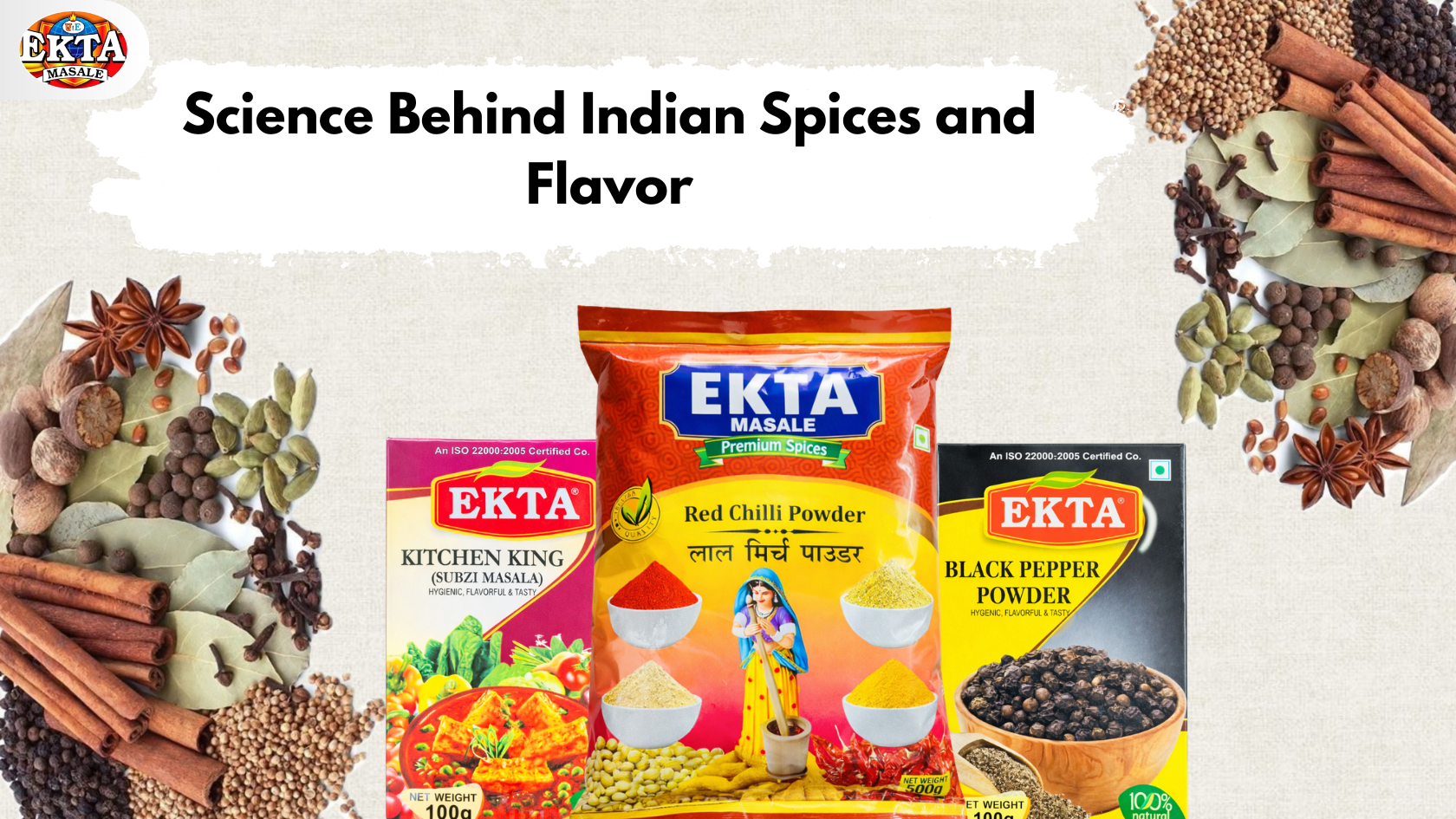
This is where Ekta Masale stands out.
Role of Ekta Masale in Flavor Science
Ekta Masale ensures:
Proper grinding
Fresh processing
No chemical mixing
This keeps spice chemistry intact.
Real Example: With vs Without Pure Spices
Without Pure Spices:
Weak aroma
Flat taste
No depth
With Ekta Masale:
Strong fragrance
Rich taste
Balanced flavors
Difference is instantly noticeable.
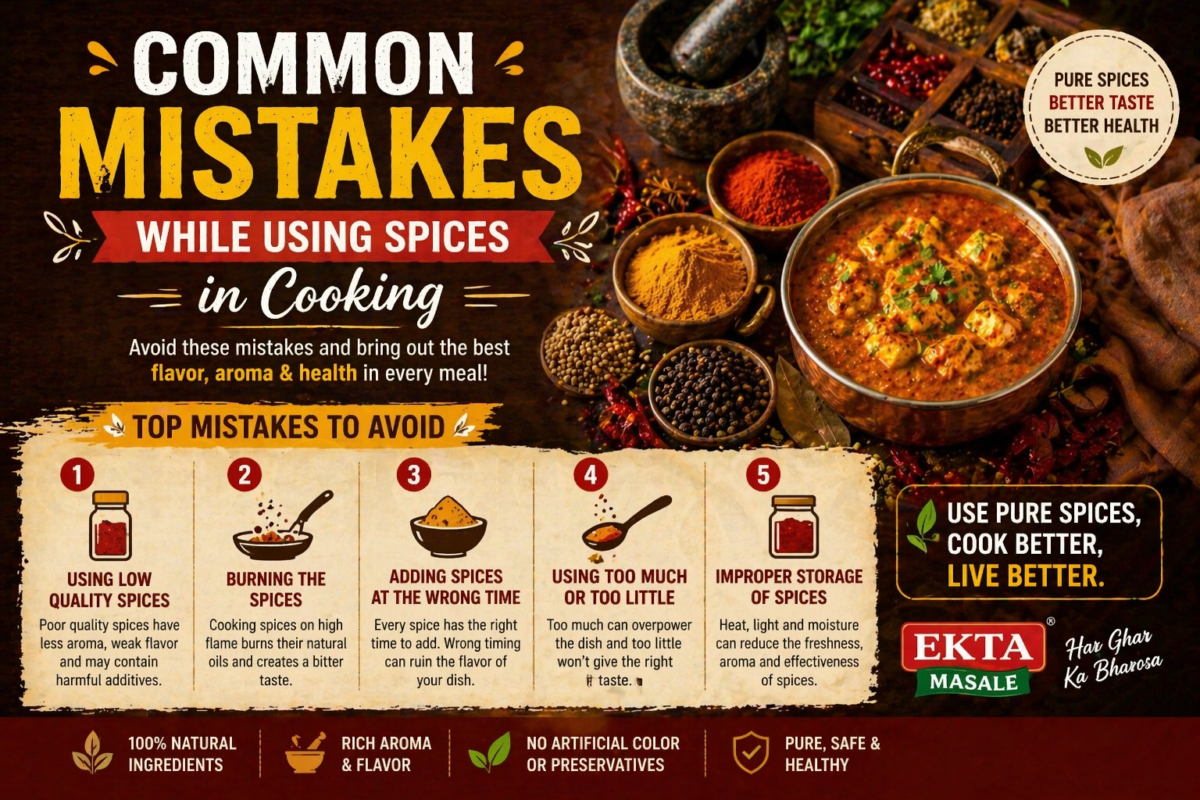
Common Mistakes That Destroy Flavor
Overheating spices
Using stale spices
Adding spices at wrong time
Using low-quality masale
These break the science of flavor.
How to Choose Scientifically Better Spices
✔ Check aroma
✔ Avoid artificial colors
✔ Buy fresh
✔ Choose trusted brands
Ekta Masale is a reliable choice.
Pro Tips for Maximum Flavor
Want restaurant-style taste?
Roast spices lightly
Use ghee
Add spices in stages
Let food rest before serving
FAQs
Q1. Why do spices taste different after cooking?
Because heat changes their chemical structure.
Q2. Why fresh spices are better?
They contain active compounds.
Q3. Do spices improve digestion?
Yes, most Indian spices support gut health.
Q4. Why does restaurant food taste better?
Better spice quality + correct technique.
Conclusion
The magic of Indian cooking is not just tradition—it’s science.
Spices work at a chemical level to enhance:
✔ Taste
✔ Aroma
✔ Texture
✔ Health
By understanding this science and using pure, natural spices like Ekta Masale, you can transform your everyday cooking into something truly exceptional.