
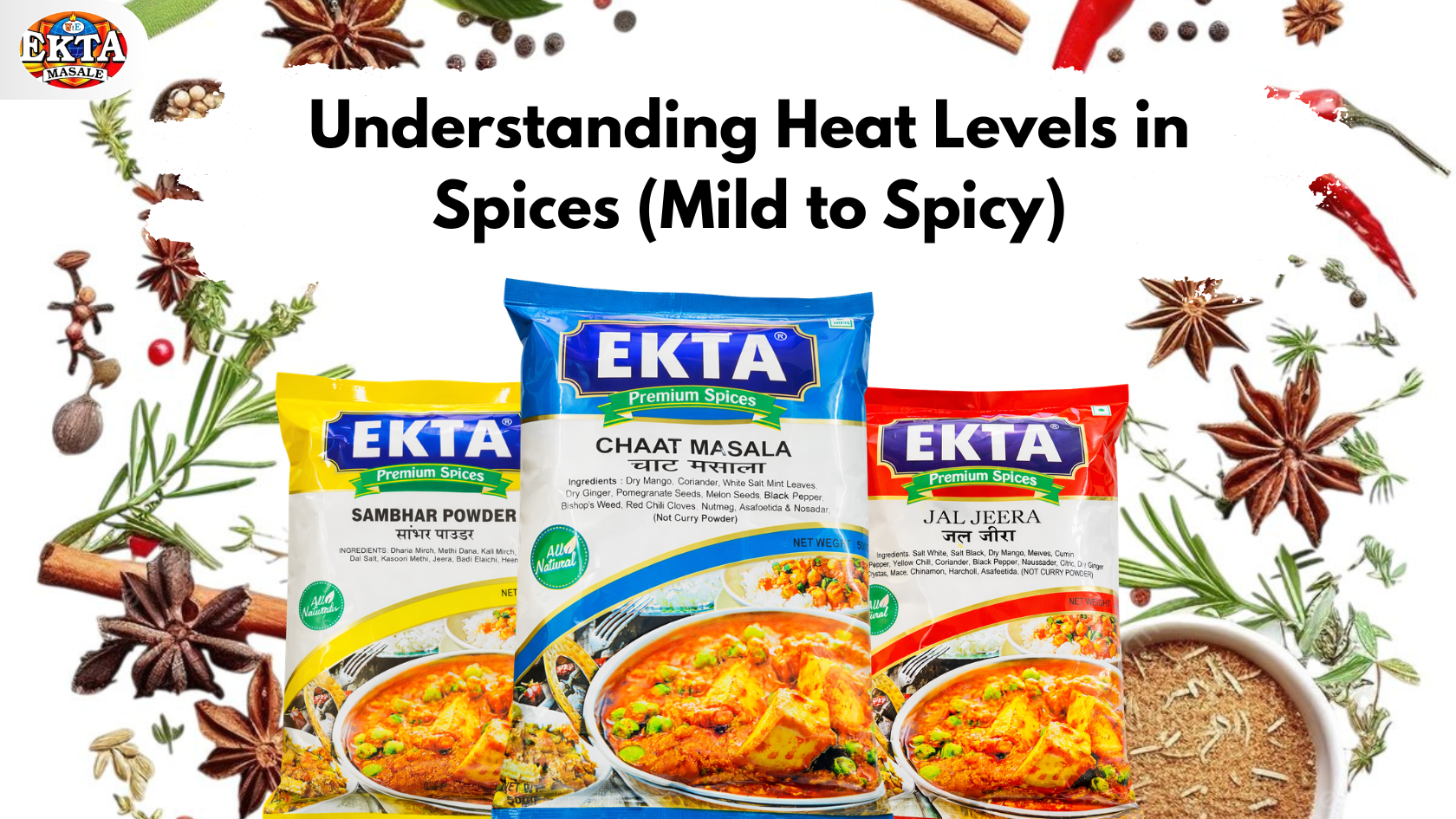
Spices are the heart of flavorful cooking, but one element that truly defines their impact is heat. From mild warmth to intense fiery burn, spices offer a wide range of heat levels that can transform any dish.
But what exactly determines how spicy a spice is? Why do some spices feel warm while others burn intensely? And how can you control spice levels in your cooking?
In this complete guide, we’ll break down heat levels in spices—from mild to extremely spicy, along with the science, measurement, and practical tips to use them effectively.
What Is “Heat” in Spices?
When we talk about “heat” in spices, we’re not referring to temperature but to the burning sensation experienced in the mouth.
This sensation is caused by chemical compounds that stimulate pain receptors on the tongue.
Key Compounds Responsible for Heat:
Capsaicin → Found in chili peppers (main source of spiciness)
Piperine → Found in black pepper (sharp heat)
Gingerol → Found in ginger (warm heat)
These compounds activate the nervous system, creating sensations ranging from mild warmth to intense burning.
The Scoville Scale: Measuring Spice Heat
The heat level of spices—especially chili peppers—is measured using the Scoville Heat Unit (SHU) scale.
What Is SHU?
SHU indicates how much capsaicin is present in a spice.
Higher SHU = More heat
Lower SHU = Less heat
Examples of Heat Levels:
| Spice | SHU Level | Heat Category |
|---|---|---|
| Bell Pepper | 0 | No Heat |
| Paprika | 100–500 | Mild |
| Jalapeño | 2,500–8,000 | Medium |
| Cayenne Pepper | 30,000–50,000 | Hot |
| Habanero | 100,000+ | Very Hot |
Categories of Spice Heat Levels
Let’s understand spices based on their heat intensity:
1. Mild Spices (Low Heat)
These spices add flavor without strong burning sensation.
Examples:
Paprika
Kashmiri chili
Cinnamon
Coriander
Characteristics:
Gentle warmth
Enhances color and aroma
Suitable for all age groups
Best Uses:
Curries
Soups
Marinades
Mild spices are perfect for beginners or those who prefer less spicy food.
2. Medium Spices (Balanced Heat)
These spices offer a noticeable kick without overpowering the dish.
Examples:
Jalapeño
Black pepper
Ginger
Mustard seeds
Characteristics:
Balanced heat
Enhances flavor complexity
Stimulates appetite
Best Uses:
Stir-fries
Gravies
Street food
Medium heat spices are widely used in everyday cooking.
3. Hot Spices (High Heat)
These spices bring intense spiciness and are used carefully.
Examples:
Cayenne pepper
Red chili powder
Thai chilies
Characteristics:
Strong burning sensation
Dominates flavor if overused
Creates sweating and heat response
Best Uses:
Spicy curries
Hot sauces
Pickles
4. Very Hot Spices (Extreme Heat)
These are for spice lovers who enjoy intense heat.
Examples:
Habanero
Ghost pepper (Bhut Jolokia)
Carolina Reaper
Characteristics:
Extremely high SHU
Can cause tears and sweating
Requires careful handling
Best Uses:
Specialty dishes
Hot sauces
Food challenges
Types of Heat in Spices
Not all heat feels the same. Different spices create different sensations.
1. Sharp Heat
Immediate and intense
Example: Black pepper
2. Slow-Building Heat
Gradually increases
Example: Chili peppers
3. Warm Heat
Gentle and comforting
Example: Ginger, cinnamon
4. Lingering Heat
Stays for a long time
Example: Hot chilies
Factors That Affect Spice Heat
1. Quantity Used
More spice = more heat.
2. Cooking Method
Cooking reduces heat
Raw spices feel stronger
3. Oil Content
Capsaicin dissolves in oil, spreading heat evenly.
4. Seeds and Membranes
In chilies, the highest heat is found in:
Seeds
Inner membranes
How to Control Heat in Cooking
a) Reduce Heat
Remove chili seeds
Use dairy (milk, yogurt)
Add sugar or acid (lemon)
b) Increase Heat
Add fresh chilies
Use hot chili powder
Add spices at the end
How to Balance Spicy Food
Balancing heat is key to good cooking.
Cooling Ingredients:
Yogurt
Cream
Coconut milk
Sweet Ingredients:
Sugar
Honey
Acidic Ingredients:
Lemon juice
Vinegar
These help neutralize excessive heat.
Health Effects of Spicy Foods
Benefits:
Boosts metabolism
Improves digestion
Releases endorphins (feel-good hormones)
Risks:
Irritation if overconsumed
Not suitable for sensitive stomachs
Why People Love Spicy Food
Spicy food creates a thrilling sensory experience:
Triggers adrenaline
Releases happiness hormones
Creates addiction-like enjoyment
Common Mistakes When Using Spices
Adding too much chili
Not balancing flavors
Ignoring spice freshness
Mixing too many hot spices
Tips for Beginners
Start with mild spices
Gradually increase heat
Taste while cooking
Learn spice combinations
Spice Heat in Indian Cooking
Indian cuisine uses a mix of:
Mild spices (turmeric, coriander)
Medium spices (ginger, black pepper)
Hot spices (red chili)
This creates a balanced heat rather than extreme spiciness.
Conclusion
Understanding heat levels in spices is essential for mastering cooking. From mild warmth to intense fire, each spice plays a unique role in enhancing flavor and creating a memorable eating experience.
The key is balance—using the right spice at the right level to suit your taste and the dish you’re preparing.
Once you understand spice heat, you’ll be able to:
Control flavor better
Cook confidently
Create perfectly balanced dishes