
Introduction
Indian cuisine is famous around the world for its rich flavors, vibrant colors, and aromatic dishes. Behind every delicious curry, dal, sabzi, biryani, or street food recipe lies one secret ingredient—spices.
In a city like Delhi, where food is more than just a necessity, spices are an essential part of everyday life. From traditional North Indian recipes to modern fusion dishes, the right spices can transform an ordinary meal into an unforgettable culinary experience.
Whether you're a beginner cook, a homemaker, or someone looking to improve your daily cooking, understanding the Indian spices Delhi households commonly use is important.
In this detailed guide, we'll explore the top Indian spices every Delhi kitchen should have, their uses, benefits, and why they are considered the foundation of authentic Indian cooking.
Why Spices Are Essential in Indian Cooking
Indian spices do much more than add flavor.
They help:
✔ Enhance taste and aroma
✔ Improve food color naturally
✔ Create balanced flavors
✔ Support traditional wellness practices
✔ Add depth and complexity to dishes
Without the right spices, even the best recipe can feel incomplete.
This is why every Delhi household maintains a well-stocked spice collection.
Understanding Kitchen Masala Essentials
A well-equipped Indian kitchen doesn't require dozens of spices.
Instead, a few carefully selected spices can help prepare hundreds of different recipes.
These are known as kitchen masala essentials because they are used regularly in daily cooking.
Let's explore the most important ones.
1. Turmeric Powder (Haldi)
Turmeric is one of the most commonly used spices in Indian households.
No Delhi kitchen is complete without it.
Uses
Dal
Sabzi
Curries
Rice dishes
Marinades
Why It's Important
Turmeric provides:
✔ Natural golden color
✔ Earthy flavor
✔ Traditional health benefits
Even a small amount can significantly enhance a dish.
2. Red Chilli Powder
Red chilli powder adds both color and heat to Indian food.
It is widely used across Delhi's home kitchens and restaurants.
Uses
Paneer dishes
Vegetable curries
Chole
Rajma
Street food recipes
Benefits
✔ Enhances flavor
✔ Adds vibrant color
✔ Improves overall taste
Choosing pure chilli powder is important for achieving authentic results.
3. Coriander Powder (Dhania Powder)
Coriander powder is one of the most versatile spices in Indian cooking.
Its mild and earthy flavor acts as the foundation for many recipes.
Uses
Dal
Chole
Rajma
Vegetable curries
Gravy preparations
Why Delhi Families Love It
It balances stronger spices while enhancing overall flavor.
4. Cumin Seeds (Jeera)
Cumin is considered one of the most important spices in Indian cuisine.
It is often used during the tempering process.
Uses
Tadka
Rice dishes
Curries
Chaat
Soups
Benefits
✔ Rich aroma
✔ Distinctive taste
✔ Traditional digestive support
The fragrance of roasted cumin instantly elevates any dish.
5. Garam Masala
Garam masala is often called the "magic ingredient" of Indian cooking.
It is a blend of several aromatic spices.
Common Ingredients
Cinnamon
Cloves
Cardamom
Black pepper
Nutmeg
Uses
Paneer recipes
Butter chicken
Rajma
Chole
Biryani
A small amount added at the end of cooking creates a restaurant-style aroma.
6. Black Pepper (Kali Mirch)
Before red chilli became popular, black pepper was India's primary source of heat.
Today, it remains an important spice.
Uses
Soups
Curries
Tea
Marinades
Benefits
✔ Strong flavor
✔ Rich aroma
✔ Traditional wellness support
Many Delhi households use black pepper throughout the year.
7. Mustard Seeds (Rai)
Mustard seeds are commonly used in Indian tempering.
Though more popular in South Indian cuisine, they are also used in many Delhi homes.
Uses
Pickles
Vegetable dishes
Chutneys
Tempering
They add a unique nutty flavor when heated in oil.
8. Asafoetida (Hing)
Hing is a powerful spice used in very small quantities.
It is especially popular in vegetarian cooking.
Uses
Dal
Kadhi
Potato dishes
Lentil recipes
Why It Matters
A pinch of hing can completely transform the flavor profile of a dish.
9. Dry Mango Powder (Amchur)
Amchur is one of the key ingredients responsible for the tangy flavor found in many North Indian dishes.
Uses
Chole
Aloo sabzi
Chaat
Stuffed parathas
Benefits
✔ Tangy flavor
✔ Taste enhancement
✔ Authentic North Indian touch
Many Delhi street food recipes rely heavily on amchur.
10. Chaat Masala
Delhi is famous for its street food, and chaat masala plays a major role in creating those flavors.
Uses
Golgappe
Aloo chaat
Dahi bhalla
Fruit salads
Why It's Popular
Its unique blend of spices creates a tangy, spicy, and irresistible flavor.
11. Cloves (Laung)
Cloves are highly aromatic spices used in many traditional recipes.
Uses
Biryani
Pulao
Tea
Curries
Benefits
✔ Intense aroma
✔ Rich flavor
✔ Premium cooking experience
12. Cinnamon (Dalchini)
Cinnamon provides warmth and sweetness to savory dishes.
Uses
Biryani
Curries
Garam masala blends
Tea
Its fragrance makes dishes more inviting and flavorful.
Essential Spice Blends Every Delhi Kitchen Should Have
Besides individual spices, some spice blends are equally important.
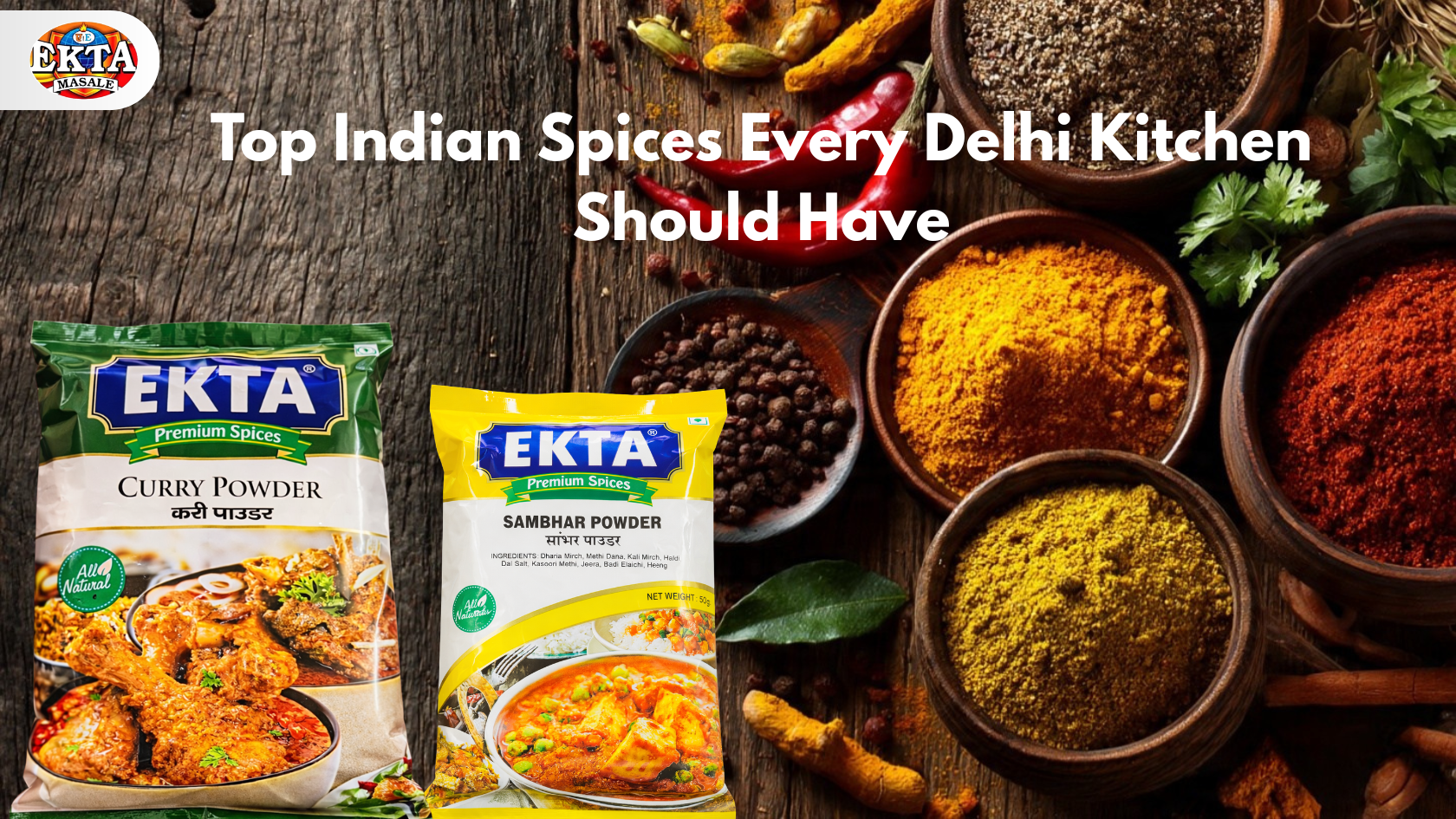
Kitchen King Masala
Perfect for mixed vegetable dishes.
Chole Masala
Essential for authentic Punjabi-style chole.
Pav Bhaji Masala
Ideal for recreating street food at home.
Biryani Masala
Adds depth to rice dishes.
Sabzi Masala
Useful for daily vegetable preparations.
Health Benefits of Indian Spices
Indian spices are valued not only for flavor but also for their traditional health-supporting properties.
Turmeric
Traditionally known for immunity support.
Cumin
Supports digestion.
Coriander
Rich in natural antioxidants.
Black Pepper
Improves nutrient absorption.
Ginger and Cinnamon
Popular for seasonal wellness support.
How to Store Spices Properly
To maintain freshness:
✔ Store in airtight containers
✔ Keep away from sunlight
✔ Avoid moisture exposure
✔ Use clean, dry spoons
Proper storage helps preserve aroma and flavor for longer periods.
Why Quality Matters When Buying Spices
Premium-quality spices offer:
✔ Better taste
✔ Stronger aroma
✔ Richer color
✔ Improved cooking performance
Low-quality spices often lose flavor quickly and may contain unwanted additives.
This is why many Delhi families prefer trusted brands that focus on freshness and purity.
Why More Delhi Households Are Choosing Premium Masalas
Consumers today are becoming more aware of:
Food quality
Ingredient transparency
Health considerations
Authentic cooking
As a result, there is growing demand for premium spice brands that provide pure and fresh products.
Brands like Ekta Masale are gaining attention because they focus on quality, aroma, and authentic flavor, making everyday cooking more enjoyable.
Conclusion
A well-stocked spice cabinet is the heart of every Indian kitchen. Whether you're preparing simple daily meals or festive delicacies, having the right spices ensures better taste, aroma, and authenticity.
From turmeric and cumin to garam masala and chaat masala, these kitchen masala essentials form the foundation of Delhi's rich culinary traditions.
By choosing high-quality spices and storing them properly, you can bring restaurant-style flavor into your home and elevate every meal you cook.