
Introduction
Vegetarian cooking in India is an art—and spices are its soul.
Unlike non-vegetarian dishes, where flavor comes naturally from meat, vegetarian food depends entirely on how well spices are used. A simple dish like aloo sabji or dal can taste extraordinary—or completely bland—based on your spice selection.
Many people think adding more spices means better taste. But in reality, correct spice selection + proper usage = perfect flavor.
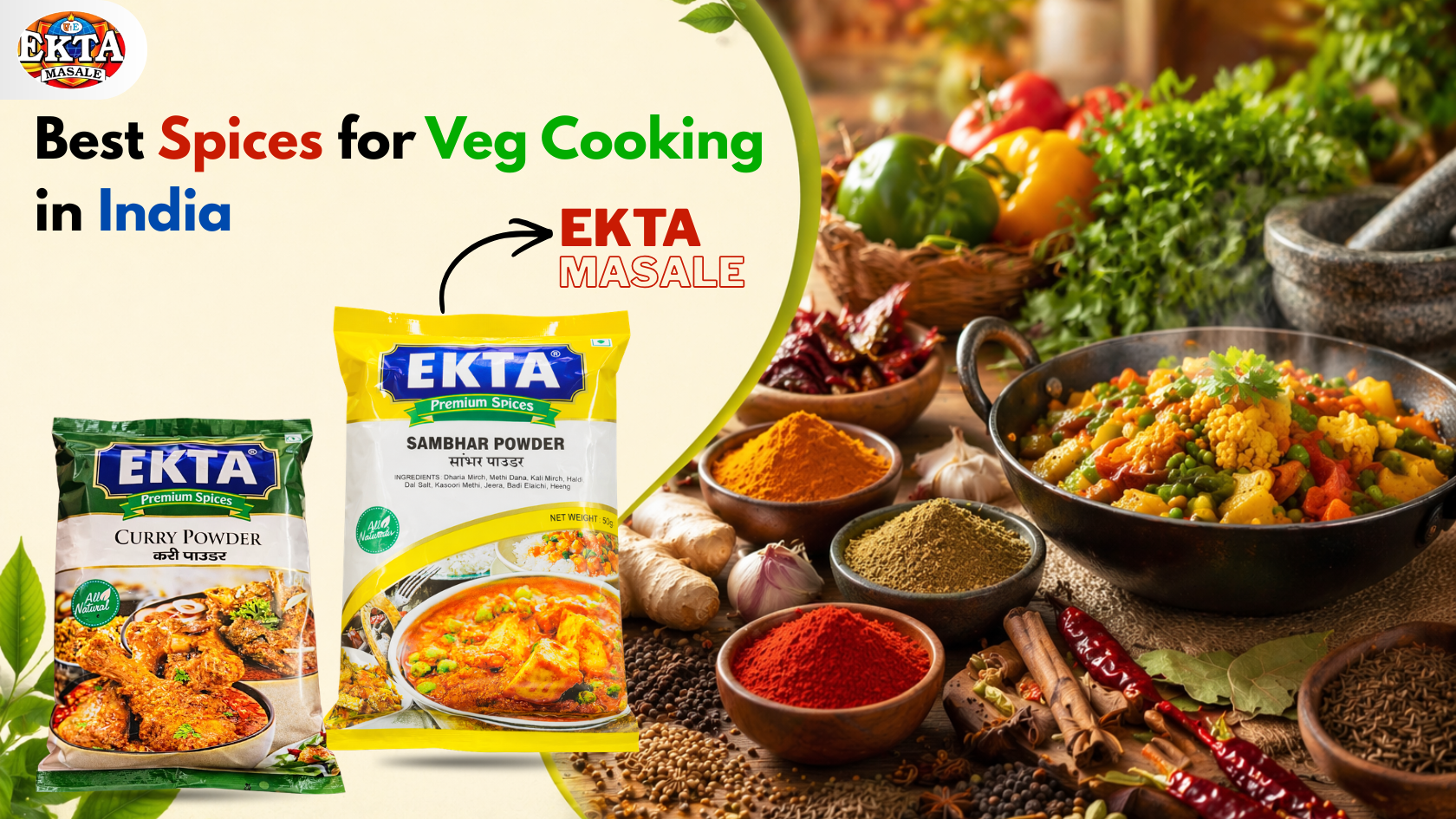
Also, the quality of spices plays a huge role. Using natural spices like Ekta Masale ensures that your food not only tastes better but is also healthier and more aromatic.
In this detailed guide, you’ll learn:
✔ Best spices for veg cooking
✔ How to use them properly
✔ Perfect combinations
✔ Pro cooking tips
✔ SEO-rich knowledge for content
Why Spices Are Essential in Vegetarian Cooking
Vegetarian cooking relies heavily on spices because vegetables have a mild natural taste.
Spices help to:
Enhance natural flavors
Add depth and complexity
Improve digestion
Balance sweetness, bitterness, and heat
Without spices, veg food feels incomplete.
As mentioned in your previous structure , spices are the core element that brings life to vegetarian meals.
Top 12 Best Spices for Veg Cooking in India (Detailed)
Now let’s go deeper into each spice
1. Turmeric (Haldi) – The Foundation Spice
Why it’s important:
Turmeric is used in almost every Indian dish as a base spice.
Key Benefits:
Powerful anti-inflammatory
Boosts immunity
Natural detoxifier
Usage:
Always add at the beginning
Cook properly to remove raw taste
Without turmeric, most Indian dishes feel incomplete.
2. Red Chilli Powder – Heat & Color
Why it’s important:
Adds spice level and vibrant color.
Types:
Kashmiri chilli (for color)
Spicy chilli (for heat)
Pro Tip:
Balance is key—too much can overpower the dish.
3. Coriander Powder – Flavor Builder
Why it’s important:
Gives body to gravies and balances spices.
Benefits:
Improves digestion
Adds earthy taste
Essential in almost all veg curries.
4. Black Pepper – Natural Heat Booster
Why it’s important:
Adds subtle sharpness without overpowering.
Benefits:
Boosts metabolism
Enhances nutrient absorption
Works best in light gravies and soups.
5. Cumin Seeds (Jeera) – Aroma Starter
Why it’s important:
Used in tadka to start cooking.
Benefits:
Improves digestion
Adds strong aroma
First step of most Indian recipes.
6. Mustard Seeds (Rai) – South Indian Essential
Why it’s important:
Used for tempering in many dishes.
Benefits:
Adds nutty flavor
Supports metabolism
Common in sambhar, poha, upma.
7. Garam Masala – Final Flavor Enhancer
Why it’s important:
Adds depth and richness at the end.
Benefits:
Improves aroma
Enhances overall taste
Always add at the final stage.
8. Asafoetida (Hing) – Digestive Powerhouse
Why it’s important:
Used in very small quantity but huge impact.
Benefits:
Prevents gas
Improves digestion
Must-have for dal and legumes.
9. Fenugreek Seeds (Methi) – Bitter Balance
Why it’s important:
Adds depth and slight bitterness.
Benefits:
Controls sugar levels
Improves digestion
Use in small quantity only.
10. Curry Leaves – Fresh Aroma
Why it’s important:
Adds freshness to dishes.
Benefits:
Rich in antioxidants
Improves hair and skin health
11. Dry Mango Powder (Amchur)
Why it’s important:
Adds tangy flavor without lemon.
Perfect for:
Dry sabji
Chaat
Street-style dishes
12. Kasuri Methi – Restaurant Taste Secret
Why it’s important:
Gives restaurant-style aroma.
Sprinkle at the end for best results.
Spice Blends That Simplify Cooking
Instead of mixing many spices, ready blends help.
Common blends:
Kitchen King Masala
Sabji Masala
Garam Masala
Using Ekta Masale blends gives:
Balanced flavor
Consistent taste
Time-saving cooking
How to Use Spices Correctly (Step-by-Step)
Step 1: Start with Tadka
Heat oil/ghee
Add cumin/mustard
Add hing
This creates base flavor.
Step 2: Add Onion & Tomato Base
This helps spices bind well.
Step 3: Add Powdered Spices
Add turmeric, chilli, coriander
Cook properly
Avoid burning spices.
Step 4: Add Final Spices
Add garam masala
Add kasuri methi
Enhances aroma.
Spice Balance Formula (Very Important)
Perfect veg cooking follows:
Heat + Aroma + Base + Finish
Example:
Heat → Red chilli
Aroma → Cumin
Base → Coriander
Finish → Garam masala
Why Natural Spices Make a Huge Difference
Most people ignore this part.
Regular masale:
Contain chemicals
Lose flavor quickly
May harm health
Natural spices (Ekta Masale):
Pure ingredients
Strong aroma
Better health benefits
Result: Better taste + healthier food
Best Spice Combinations (Practical Use)
Aloo Sabji:
Turmeric + cumin + coriander
Paneer:
Garam masala + kasuri methi
Dal:
Cumin + hing + turmeric
Mixed Veg:
Kitchen king masala
Common Mistakes in Veg Cooking
❌ Using too many spices
❌ Not cooking masala properly
❌ Using low-quality spices
❌ Adding spices at wrong stage
These mistakes reduce flavor.
Tips to Choose Best Spices
✔ Choose natural spices
✔ Check aroma
✔ Avoid artificial color
✔ Prefer trusted brands like Ekta Masale
Pro Cooking Tips (Expert Level)
Want restaurant-like taste?
Roast spices slightly
Use fresh masala
Add spices in layers
Use ghee for richness
FAQs
Q1. Which spice is most important?
Turmeric and cumin are must-have.
Q2. Can I use same spices daily?
Yes, but combinations should vary.
Q3. How to improve veg taste?
Use fresh spices and proper technique.
Conclusion
Vegetarian cooking becomes truly enjoyable when you understand spices deeply.
It’s not about using more spices—it’s about using the right spices, in the right quantity, at the right time.
By choosing natural spices like Ekta Masale, you ensure:
✔ Better taste
✔ Better health
✔ Authentic Indian flavor